
We independently curate & test every recommendation. If you buy/click through our links, we may earn a commission.
The Ultimate Guide To The Best Cutting Board Material: Wood, Plastic, Or Metal?
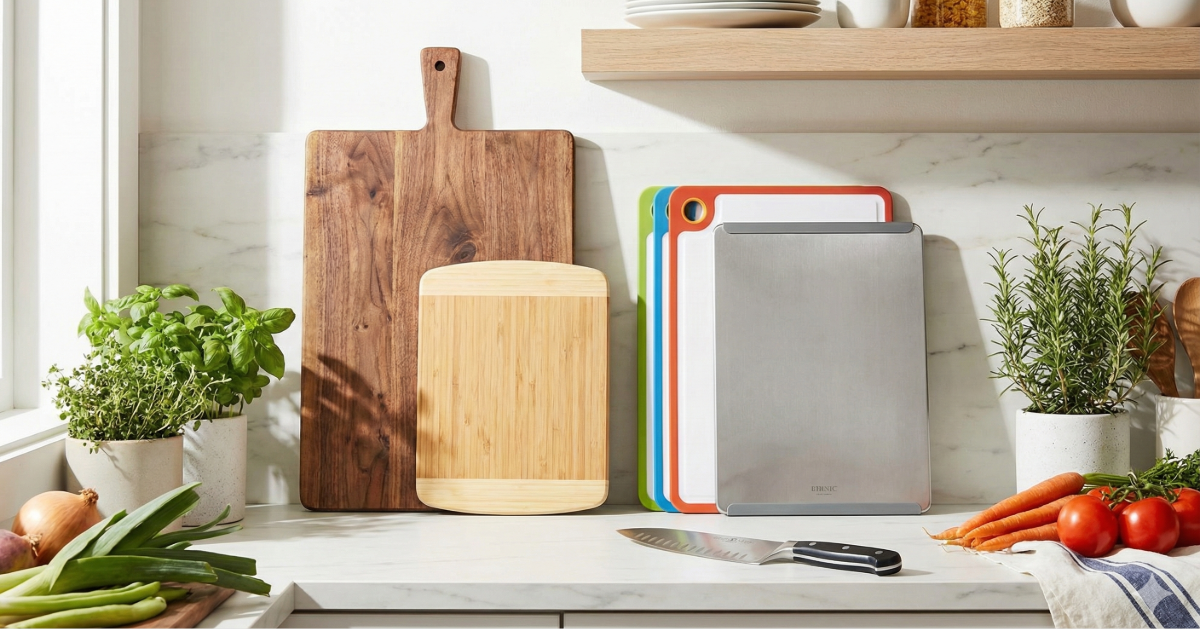
Let’s be honest: finding the best cutting board material wasn’t always my top priority. For the longest time, I thought a cutting board was just a flat surface for chopping onions. Consequently, I treated them with the same level of consideration I gave to buying trash bags.
However, I eventually fell down the kitchen aesthetic rabbit hole. Suddenly, I realized that my scarred, stained, white plastic slab was ruining my entire vibe. It was giving “college dorm room,” rather than “curated culinary sanctuary.”
Therefore, I decided to do the deep research. I tested various surfaces and even listened to the sounds of knives hitting different materials. If you are torn between aesthetics and practicality, this guide breaks down the best cutting board material for your home—including that trending metal one everyone on TikTok seems to have.
1. Wood: Is it the Best Cutting Board Material for Aesthetics?
When looking for the best cutting board material, wood (maple, walnut, cherry) is the undisputed king. In fact, it is the definition of organic sophistication in the kitchen. These boards look stunning on a counter; moreover, they make you feel like a French chef even when you’re just slicing cheddar cheese.
Pros of Wood Boards
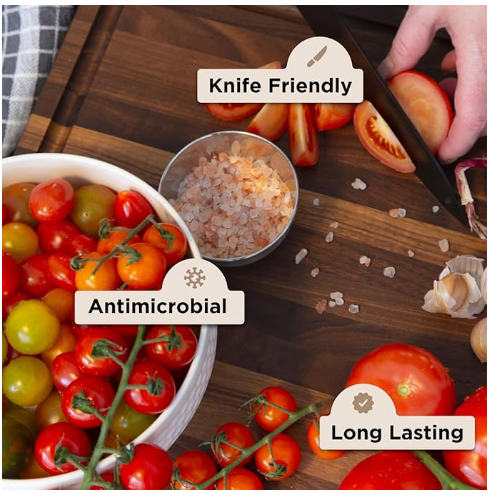
- Knife Friendly: Wood is soft enough that it “heals” somewhat after cuts and won’t dull your expensive knives.
- Aesthetics: They are gorgeous. You can chop on them and then immediately serve charcuterie on them. Double duty!
- Longevity: If you treat them right, they last forever.
Cons of Wood Boards
- Hygiene Anxiety: Wood is porous, so people often worry about bacteria. (However, studies show wood has natural antimicrobial properties—just scrub it well!).
- High Maintenance: Unfortunately, you cannot put these in the dishwasher. If you do, they will warp and crack. Consequently, you have to oil them regularly.
Our Top Picks: Wood Cutting Boards
Best for Knife Care: Walnut Board
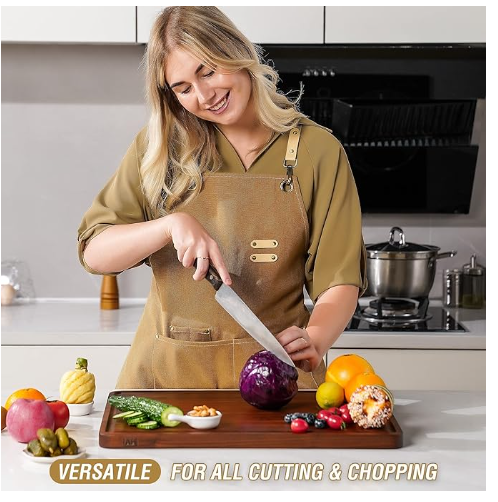
Best for Large Meals: The Versatile Workhorse
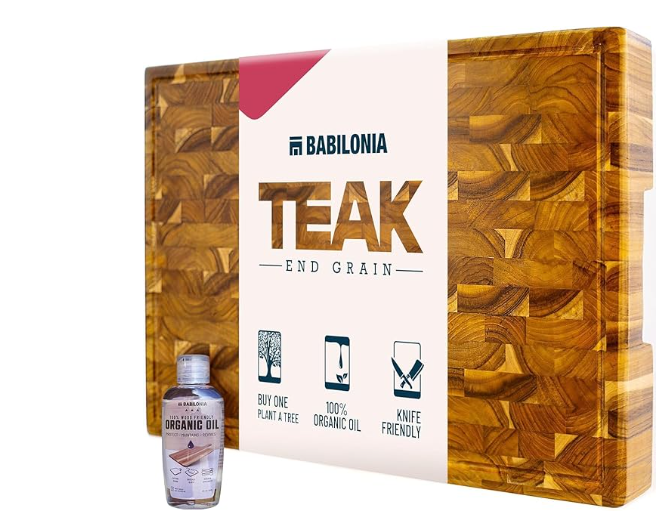
Best All-In-One Kit: Teak End Grain & Oil
2. Bamboo: The Eco-Friendly Contender
Bamboo is often grouped with wood, but it’s technically a grass. Essentially, it’s the affordable, eco-friendly cousin that shows up to the party looking great although it might be a little too intense for your blades.
Pros of Bamboo Boards
- Sustainability: Bamboo grows incredibly fast, making it a sustainable choice.
- Water Resistant: It absorbs less liquid than wood, so it warps less easily.
- Price Point: Generally cheaper than a big slab of walnut.
Cons of Bamboo Boards
- Too Hard for Knives: Bamboo is high in silica, which makes it harder than traditional wood. While this is great for durability, it is bad for your knife edges. As a result, it will dull your blades faster than maple or walnut.
- Prone to Cracking: Despite its water resistance, bamboo can still crack or splinter if soaked in water or put through the dishwasher. Always hand wash and dry immediately.
Our Top Picks: Bamboo Cutting Boards
Best Value: 3-Piece Bamboo Set
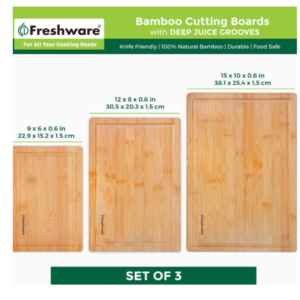
Best Design: Elegant Serving Board

Best for Hygiene: Task-Specific Set

3. Plastic: The Best Cutting Board Material for Durability
Look, plastic isn’t winning any beauty pageants. It’s the sweatpants of kitchen gear. But sometimes, when you are dealing with raw chicken, you just need sweatpants.
Pros of Plastic Boards
- Dishwasher Safe: The holy grail of kitchen cleanup. Toss it in, sanitize it, forget it.
- Affordable: You can buy a multi-pack for the price of a latte.
Cons of Plastic Boards
- Micro-Grooves: Plastic gets deep grooves from knives very quickly. Bacteria loves to hide in those cuts. Once it looks fuzzy, it’s trash.
- Staining: Cut one beet or a batch of turmeric chicken, and that board is orange forever.
Our Top Picks: Plastic Cutting Boards
Best Durability: Gorilla Grip Boards
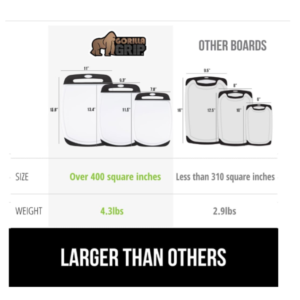
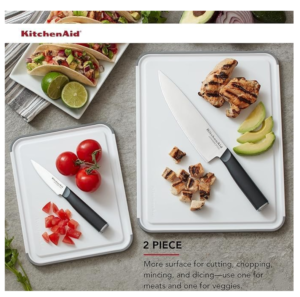
Best Non-Slip: KitchenAid Cutting Board Set
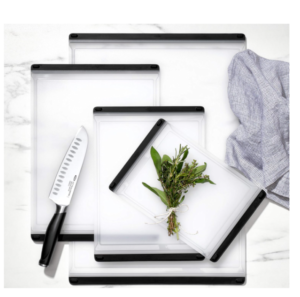
Best Grip: OXO Everyday Cutting Board Set
4. Metal (Titanium): The Trending Viral Pick
If the algorithm has targeted you recently, you’ve seen the titanium cutting board. It looks sleek, hygienic, and indestructible. But is it the best cutting board material, or just a fad?
Pros of Metal Boards
- Hygiene King: It is non-porous. No smells, no stains, no bacteria hiding in cracks. You can defrost meat on it quickly because metal conducts heat.
- Durability: You could probably run this over with a car and it would survive.
Cons of Metal Boards
- The Noise: Warning: If you have sensory issues, scroll away. Metal on metal creates a sound that can only be described as “nails on a chalkboard’s evil twin.” It is loud.
- Slippery Surface: Unless it has great rubber feet, your onions might go sliding off the runway.
- Knife Damage: Metal is harder than your knife blade. It will roll and dull the edge of your knife very quickly.
Our Top Picks: Metal (Titanium) Cutting Boards
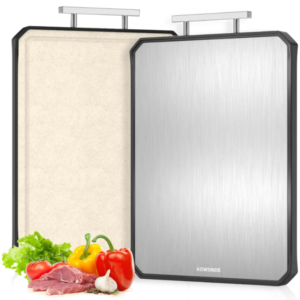
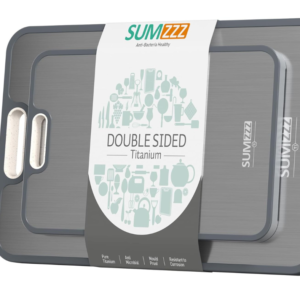
Best Set: Pure Titanium Boards
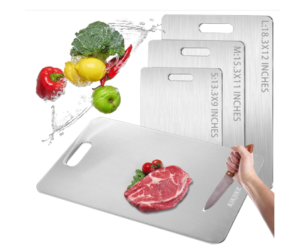
Ditch the microplastics: This 2025 upgraded titanium set is crack-proof, odor-resistant, and gentle on your best knives.
Final Verdict: Choosing the Best Cutting Board Material for You
Here’s the honest truth: there is no single best cutting board material for everyone — it depends entirely on how you cook, how much you care about aesthetics, and how much maintenance you’re willing to do.
Choose Wood if you want a beautiful, long-lasting board that will look stunning on your counter and serve you for decades — as long as you’re willing to hand wash and oil it regularly.
Choose Bamboo if sustainability matters to you and you want an affordable, eco-friendly option for everyday produce prep. Just keep it away from your best knives.
Choose Plastic if you prioritize hygiene and convenience above all else — especially for raw meat. It’s the workhorse of the kitchen for a reason.
Choose Metal (Titanium) if you want the most hygienic, bacteria-proof surface available and you love a sleek, modern aesthetic. Just invest in a good knife sharpener to go with it.
Our personal recommendation? Own at least two boards — one wood for counter-top prep and serving, and one plastic or titanium dedicated to raw proteins. That combination covers every cooking scenario without compromise.
Ready to Upgrade Your Kitchen Setup?
Your cutting board is one of the most-used tools in your entire kitchen — it deserves some thought. Whether you go classic wood, practical plastic, eco bamboo, or trending titanium, browse our curated picks above for the best options at every price point. Your knives (and your kitchen aesthetic) will thank you.
FAQ: Common Cutting Board Questions
How many cutting boards do I need?
You don’t need a massive collection, but you should abide by the “Rule of Three”:
- The “Raw Danger” Board: A dedicated plastic or composite board for raw meat.
- The “Big Daddy” Wood Board: A large, heavy wooden board for vegetables, breads, and dry prep. Ideally, this lives on your counter.
- The “Quickie” Board: A small, lightweight board for slicing a single lemon or apple.
What is the safest cutting board material for raw meat?
Plastic is the most recommended material for raw meat because it is non-porous, dishwasher-safe, and easy to fully sanitize. That said, metal (titanium) boards are also an excellent hygienic choice since they have zero pores for bacteria to hide in. Whatever material you choose, the golden rule is to dedicate one board exclusively to raw proteins and never use it for ready-to-eat foods like fruits, bread, or cooked meals.
How do I clean and maintain a wood cutting board?
Never put a wood board in the dishwasher — the heat and moisture will cause it to warp and crack. Instead, wash it by hand with warm soapy water immediately after use, then stand it upright to dry so air circulates on both sides. To maintain it, rub the surface with food-grade mineral oil or a beeswax board cream once a month. This keeps the wood from drying out, prevents deep knife grooves from forming, and extends the life of your board significantly.
How often should I replace my cutting board?
It depends on the material. Plastic boards should be replaced once they develop deep grooves that are difficult to scrub clean — bacteria can colonize those cuts even after washing. Wood boards, if properly oiled and maintained, can last decades. Bamboo boards typically last several years before they start to splinter. As a general rule: if your board smells even after washing, looks heavily scarred, or has visible cracks, it’s time for a new one.